
DHT and Hair Loss
Experiencing thinning hair, receding hairline, or increased hair loss? The root cause is DHT.
Dihydrotestosterone (DHT) is a hormone derived from testosterone that plays an important role in male development, particularly during fetal growth and puberty. However, later in life, DHT can have an unintended effect on the scalp for both men and women. DHT is the larger, beneath-the-surface factor of the hair loss iceberg analogy.
How DHT Causes Hair Loss
When DHT is produced in the scalp, it begins to disrupt the natural hair growth cycle. As DHT builds up in the scalp, it triggers inflammatory signals and suppresses the body’s natural hair growth processes.
This leads to follicles shrinking over time, producing thinner and weaker strands with each cycle. At the same time, critical growth pathways, like Wnt signaling, are reduced, making it harder for hair to regenerate and maintain density.
The result is a slow, progressive thinning process that many patients don’t fully notice until significant hair loss has already occurred.
Hair Loss Timeline
Hair loss often follows a gradual timeline:
- Early stages: Can begin in the late teens to early 20s
- Most noticeable progression: 20s–30s
- Advanced thinning: 30s–50s (if untreated)
Because this process is slow and progressive, often described as a “glacier effect,” many patients don’t notice it until significant density has already been lost.
DHT and Hair Loss in Men
As DHT continues to affect the scalp, the hair growth cycle becomes progressively weaker.
This gradual process is what leads to thinning hair, receding hairlines, and crown balding, commonly known as androgenetic alopecia (male pattern hair loss). In most men, this presents as a receding hairline and crown thinning.
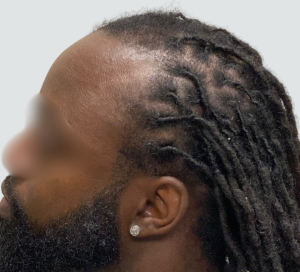
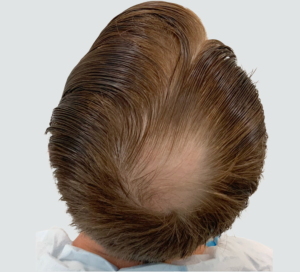
Images above showcase the tell-tale signs of male pattern hair loss, receding hairline, and crown thinning (BEFORE photos).
DHT Targets the Hairline and Crown
The follicles along the front (hairline), mid-scalp, and crown are more susceptible to DHT. Over time, DHT binds to these follicles and gradually weakens them, causing them to shrink and produce thinner hair with each growth cycle.
Meanwhile, the hair on the sides and back of the scalp is typically resistant to DHT. This is why these areas are preserved, and why they serve as the donor region for hair transplant procedures.
Norwood Scale
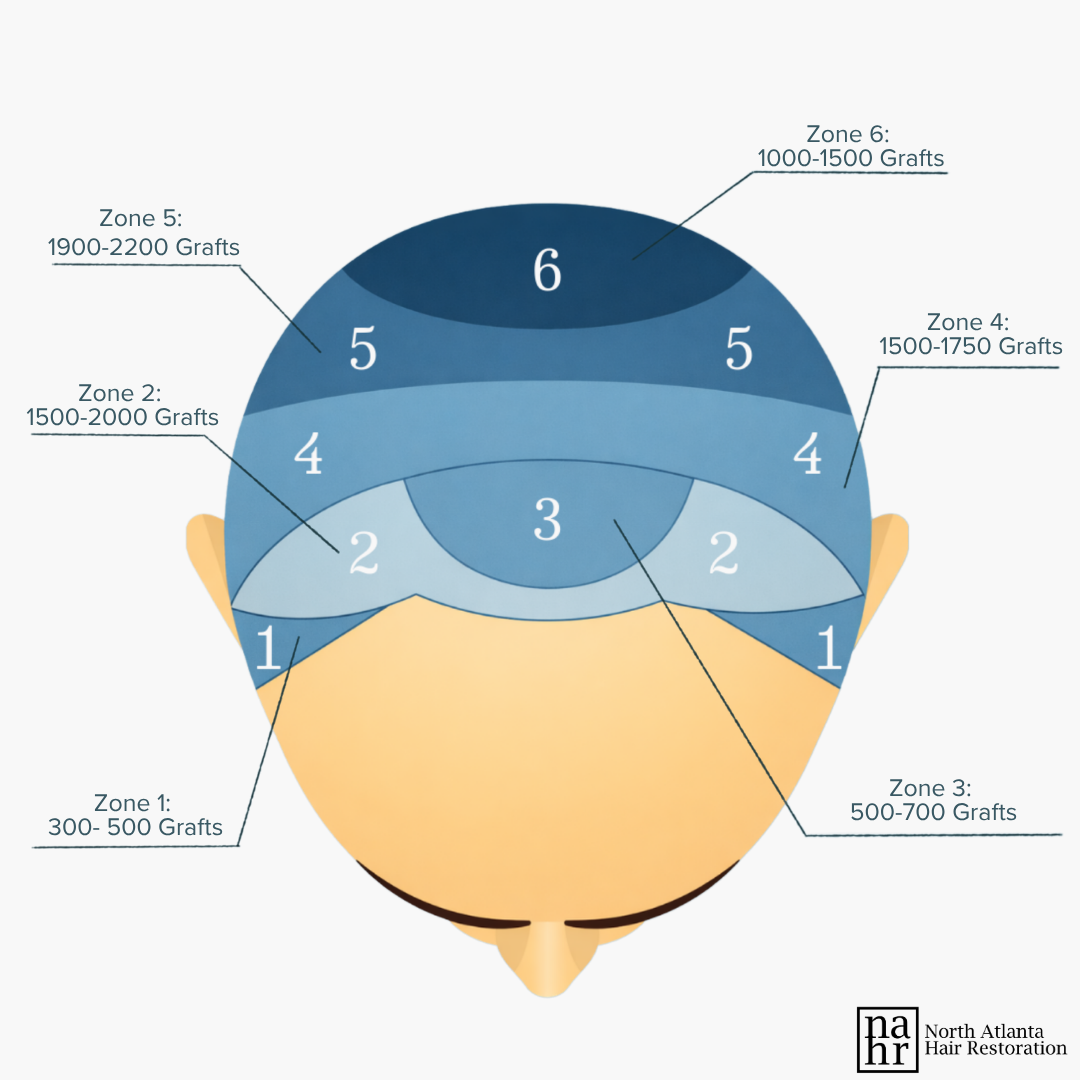
Male pattern hair loss progression is commonly classified using the Norwood Scale, a widely recognized system that maps the stages of hair loss from early recession to more extensive balding and determines potential graft count for each stage. Determining your Norwood Scale number is the first step in a male hair loss treatment plan.
It’s important to note that hair loss is not just about how much DHT hormones you have in your bloodstream or in and around your hair follicles; it’s about how sensitive your hair follicles are to DHT.
DHT and Hair Loss in Women
While hair loss is often associated with men, female hair loss is far more common than most people realize and is often not talked about.
DHT (dihydrotestosterone) can also play a role in hair thinning in women, but it typically presents very differently than in men.
Instead of a receding hairline or bald spots, women more commonly experience thinning across the scalp, widening of the natural part line, and an overall loss of hair density and volume. Complete baldness is rare in women. However, the impact on confidence and appearance can be just as significant.
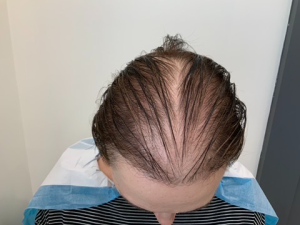
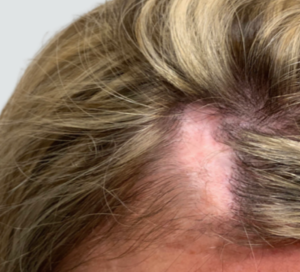
Images above showcase the tell-tale signs of female pattern hair loss, thinning hair, temporal recession/balding (BEFORE photos).
The Role of Hormones in Female Hair Loss
Female hair loss is often influenced by hormonal changes that can increase sensitivity to DHT. Common triggers include Menopause, PCOS, or Postpartum changes.
The good news: effective solutions exist, and they can be highly discreet. For women experiencing advanced thinning or density loss, Shave-less (No Shave) FUE hair transplant is often an ideal option.
Because women rarely want to cut or shave their hair, this technique aligns perfectly with both aesthetic goals and lifestyle needs.
Can You Stop DHT Hair Loss?
The earlier you address hair loss, the more you can preserve.
DHT blockers like Finasteride and Dutasteride are designed to slow or stop this process at the source, while treatments like Minoxidil help support regrowth and strengthen existing hair.
Without treatment, DHT will continue to miniaturize follicles, limiting your long-term restoration options.
Advanced Solutions for DHT Hair Loss
Once hair follicles are significantly weakened or no longer producing hair, medical therapy alone may not be enough to restore density.
This is where advanced hair transplant for men and women comes in to help rebuild the hairline and fill in areas of thinning. At North Atlanta Hair Restoration, we specialize in Shave-less (No-Shave) FUE and Long-Hair FUE (Preview Option).
Whether you’re searching for an Atlanta hair transplant or an Alpharetta hair restoration, choosing the right technique and team makes all the difference.
Ready to Take the Next Step?
Hair Restoration is a marathon, not a sprint. Hair growth is often best maximized by a combination of medical management and transplantation to restore what hair has been lost.
With the right plan, you can take control of your hair loss and achieve natural, confident results.
Schedule a consultation with North Atlanta Hair Restoration to build a personalized treatment strategy designed for long-term success.